
Last Updated on 2026-03-01 by Tsubaki
When visiting Tokyo in autumn, most people think of chasing red maple leaves, but there’s another dazzling experience you shouldn’t miss: the Ikegami Honmonji Oeshiki Lantern Parade (お会式|Oeshiki), a grand Buddhist festival held every October.
The scale of this event is truly incredible. According to official records, more than 300,000 people join the celebration each year. The entire street stretching from Ikegami Station to Honmonji Temple transforms into a lively pedestrian zone. The festival reaches its climax with the Lantern Parade, where dozens of elaborately decorated mandō floats, carried and pushed by groups of believers, form a long, glowing procession. The sight is absolutely breathtaking!
And what surprised me the most was the sheer number of food stalls lining the streets. Honestly, it felt even grander than the Hiroshima Lantern Festival or the Kawagoe Festival, easily one of the largest night markets I’ve ever seen in Japan.
In this article, I’ll take you through this incredibly festive and atmospheric local Buddhist celebration that draws visitors from all over Japan!
Switch language:繁體中文
What Is the Ikegami Honmonji Oeshiki Lantern Parade?

The Oeshiki (御会式|おえしき) is a Buddhist memorial event held to honor the passing of Nichiren Shonin, the founder of the Nichiren sect. The tradition dates back to the Muromachi period, and the Ikegami Honmonji Oeshiki has a history spanning over 600 years, making it one of the largest and most significant Oeshiki ceremonies in all of Japan.

While Nichiren temples across Japan hold similar rituals, the most iconic and grandest version takes place right here in Ota Ward, Tokyo at Ikegami Honmonji Temple. The event is held annually from October 11 to 13, with the highlight being the Lantern Procession on the night of October 12. The procession usually begins around 6:00 PM and continues non-stop until 11:00 PM, lighting up the streets for five full hours.
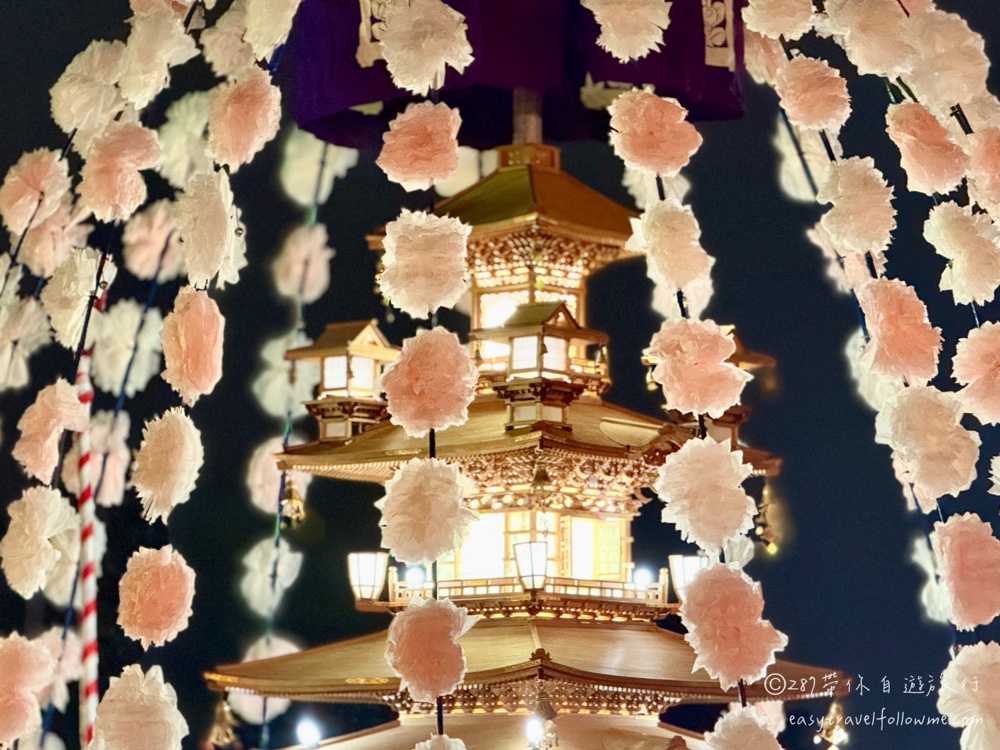
But this isn’t your average quiet Buddhist ritual, it’s a vibrant nighttime celebration where spiritual devotion meets traditional festivity. Picture this: rows of handmade lantern floats adorned with pink paper blossoms, echoing drumbeats and rhythmic chants, all set under a canopy of night lights. The atmosphere feels like you’ve stepped straight into an Edo-period night festival.

Each year
over 300,000 people gather around Ikegami Honmonji and its surrounding streets. It’s more than a Buddhist ceremony, it’s a huge cultural event where religion and local traditions blend seamlessly. Along the Omotesando approach, the streets are packed with parade groups and rows of yatai (festival food stalls), creating a unique experience where you can appreciate the solemn rituals while indulging in local street food. It’s one of the most atmospheric autumn festivals in Tokyo.
Although it doesn’t have the international fame of events like the “Three Great Festivals of Tokyo,” the local energy and enthusiasm are unmatched. Foreign visitors are still relatively few, but that’s what makes it feel like an authentic Tokyo autumn night festival, rich in spirit and scale.
Historical Background: Why Ikegami?

Ikegami Honmonji’s deep connection with the Oeshiki comes from a pivotal moment in history.
Place of Nichiren’s Passing: In 1282, Nichiren Shonin passed away in the Ikegami area, making it one of the most sacred sites in the Nichiren sect.
Meaning of Oeshiki: The term “Oeshiki” refers to a memorial service for a revered monk. “会” (kai) means gathering, and “式” (shiki) means ceremony. The event blends prayer, remembrance, and gratitude.
The tradition began during the Muromachi period and continued to evolve. By the Edo period, it had taken the shape of the grand and festive event we see today, fusing folk customs with religious rituals.
Event Schedule, Location & Access


Main Dates: Held every year from October 11 to 13
October 11 (Eve Ceremony): A solemn Buddhist ritual is held within the temple grounds.
October 12 (Lantern Procession): Dozens of mandō floats decorated with pink paper flowers and lanterns are carried through the streets by believers, accompanied by taiko drumming and energetic chants,a truly spectacular sight.
October 13 (Memorial Service): A formal memorial service is held for Nichiren Shonin.
Festival Highlight: The Lantern Procession on October 12 is the climax of the Oeshiki! It kicks off around 6:00 PM and lasts until 11:00 PM, with the energy building throughout the night. If you’re planning your visit, I highly recommend attending on the 12th to catch the most exciting part!
Location: 1 Chome-1-1 Ikegami, Ota City, Tokyo 146-8576, Ikegami Honmonji Temple (Google Maps)
Nearest Station:
Tokyu Ikegami Line – Ikegami Station
As soon as you exit the station, you’ll see the lantern floats forming their parade lines. From there, it’s about a 10–15-minute walk to reach the temple.
Official Website: Ikegami Honmonji
How Spectacular Is the Mandō Lantern Parade?

It’s hard to put into words just how electrifying the atmosphere is, you have to experience it to believe it! Each mandō float looks like a giant cherry blossom tree, covered in layers of pink paper flowers, and when illuminated at night, the entire street transforms into a glowing pink path of light.

In recent years, the traditional pink design has evolved into a colorful array of lanterns, some even resemble electronic parade floats, with flashing lights and bold styles that feel like something out of a spiritual rock concert. Add in the relentless beat of taiko drums and the chanting voices of participants. You’ll be swept into a night that feels alive with soul and energy.

Each float is handcrafted and carried by a group of temple followers, and over 3,000 people take part in the procession every year. An absolutely massive undertaking.

The route runs from the shopping street in front of Ikegami Station, continues down the Omotesando approach, and finally ascends the stone staircase leading to the main hall of Ikegami Honmonji. The excitement is palpable all along the route, with onlookers cheering enthusiastically on both sides of the street.
During the parade, the entire neighborhood becomes a pedestrian-only zone, creating a festive space that feels like a celebration by and for the local community.
What Else Is There Besides the Parade?
A Giant Night Market with Endless Food Stalls

The festival also features an incredible number of yatai (food stalls), from takoyaki, yakisoba, senbei, and chocolate-covered bananas to international favorites like Turkish ice cream and shawarma. It feels less like a typical night market and more like a full-on food expo!
Even though there was already so much to try, I couldn’t help but miss the energy and variety of Taiwanese night markets. If only I could get my hands on some braised snacks, salt & pepper fried chicken, or my personal favorite, a good old Taiwanese-style crepe. That would’ve been perfect!
But here’s a very important tip: almost all the food stalls are cash only. Even though Japan has become more cashless in recent years, PayPay, Suica, and other mobile payments don’t work here. So be sure to bring plenty of yen in cash. Especially if you’re planning to eat your way through the festival. Otherwise, you’ll be left standing in front of the food stalls drooling in frustration, and that would be a real tragedy!
Photo spots Everywhere

The glowing pink floats, paired with the participants in ceremonial robes, make for stunning photo opportunities. Right after stepping out of Ikegami Station, you’ll see the float lines stretching along the Omotesando, illuminating the street like a dreamy river of light.

From 6:00 PM to 11:00 PM, the floats weave continuously through the neighborhood, so no matter what time you arrive, you’ll be able to capture beautiful, ceremonial, and artistic scenes. Each float has its own unique design and decoration, making this event a photographer’s paradise. You won’t want to miss a single shot.
A Rare Nighttime Temple Experience

Most temples in Japan close their gates by sunset, so it’s rare to experience temple grounds at night. But during Oeshiki, Ikegami Honmonji remains open late, offering visitors a chance to explore the temple in a soft, illuminated glow alongside the ongoing ceremonies.

The gentle light from the mandō floats, the flicker of lanterns within the temple, and the serene architecture of the main hall under the night sky create a setting that feels both sacred and warm. Even if you’re not religious, standing before the lit-up main hall can make you feel as if time has stopped. It’s a deeply moving experience that leaves a lasting impression.
Final Thoughts
The Ikegami Honmonji Oeshiki Lantern Parade is not just another temple festival or night market. Tt’s a profound cultural and spiritual event with deep historical roots. Even if you’re not a follower of Nichiren Buddhism, you’ll likely feel the sense of prayer, devotion, and community that pulses through the parade.
So next time you’re in Tokyo in October, consider spending an evening in Ikegami. You might just stumble upon one of the city’s most powerful hidden autumn festivals, a celebration where local spirit, tradition, and beauty come together in an unforgettable way.
**********************************
Traveler’s Note:
The insights shared above are based on my personal experiences and subjective perspectives. When planning your trip, please consider current weather conditions and your own travel preferences.
Please note that all English articles on this site are AI-assisted translations of the original Traditional Chinese content. While every effort is made to ensure accuracy and natural flow, occasional nuances or expressions may differ. Thank you for your understanding.
In an era dominated by viral trends and “clickbait” locations, my true passion lies in exploring hidden corners and regions where information is scarce. I know firsthand how precious detailed, reliable information is when planning a journey. That is why I dedicate countless hours to research and field exploration, to curate these hard-earned insights for fellow travelers like you.
Every article and image on this site represents a significant investment of time and heart. If this content has helped you, the best way to support me is by sharing or reposting this link. I kindly ask that you respect original creators; unauthorized copying or re-uploading is strictly prohibited (all content is protected under DMCA).
Catch my latest travel moments on Instagram: @287.travel
Fuel my next journey: If my guide made your trip smoother, feel free to [Buy Me a Coffee]. Your support keeps this project moving forward!
Thank you for being a part of this community.

**********************************

