Last Updated on 2026-03-01 by Tsubaki
Hakone is a volcanic lake region located just west of Tokyo, in Kanagawa Prefecture. It’s a popular destination for day trips thanks to its easy access from the city.However, Hakone transportation is both diverse and complex, which can make it tricky for first-time visitors to figure out how to get around or which transfers are the most efficient.
In this guide, I will share my personal travel experiences to help you fully understand the transportation network within Hakone, including the entire Hakone Round Course (also known as the Hakone Loop) and all public transit options in the main sightseeing zones.
※ This article includes updated pricing as of October 1, 2025.
Hakone Sightseeing Area Overview

The Hakone sightseeing area consists of several popular districts: Hakone-Yumoto, Miyanoshita & Kowakidani, Gora, Sengokuhara, Owakudani, and Lake Ashi. Each area has its own unique attractions, hot spring resorts, and accommodations.
A great way to explore Hakone is to start from the transportation hub of Hakone-Yumoto Station and travel in a counterclockwise loop using the mountain railway, funicular, ropeway, and sightseeing cruise.
This route, known as the Hakone Loop or Hakone Round Course, offers not only a smooth sightseeing flow, but also a complete experience of Hakone’s various modes of transportation and natural beauty.
Transportation Within the Hakone Area

There are many forms of public transportation available in Hakone. Most of the time, you can transfer seamlessly from one mode to another, so even if you’re not driving, it’s very easy to get around.
Trains, buses, ropeways, and ships all run frequently, so you don’t have to rush or worry too much about scheduling.
If you’re planning a trip to Hakone, chances are you’ll use multiple types of public transit introduced in this article. That’s why I highly recommend getting the Hakone Free Pass in advance.
Otherwise, you’ll have to line up and buy a ticket at each stop, which takes time and energy, and in most cases, the total cost will be significantly higher than the pass.
>> Check details of the Hakone Free Pass on KKday
Hakone Free Pass

The Hakone Free Pass is available in 2-day and 3-day versions, but even if you’re just visiting for one day, the total cost of public transportation between Shinjuku and Hakone will already exceed the pass price.
On top of that, the pass includes rides on the pirate ship, cable car, and ropeway, so it’s a fantastic deal!
Unless you’re driving, joining a group tour, or renting a private car, buying the Free Pass will save you time, money, and hassle.
The pass covers all public transportation options introduced below, and also offers discounts at various attractions and facilities. (Click here to check details)
❗️The Odakyu ticket counter at Shinjuku Station opens at 7:30 AM.
If you’re planning to take an early train, you might not make it in time to buy a paper ticket. In that case, we recommend purchasing the digital version on Klook, which is more convenient for mobile use.
>> Click here for full details about the Hakone Free Pass on Klook
I recently wrote an articles to help you decide between digital and physical passes. If you want to know the detail, check this out: “Hakone Free Pass: Physical vs Digital Ticket Comparison”
Hakone Tozan Railway

The mountain railway that connects Hakone-Yumoto and Gora is Japan’s only authentic mountain train.
As you ride, you’ll notice the train slowly climbing the slope. Because of its zigzag switchback system, it even changes direction during the ride, and no, it’s not your imagination!
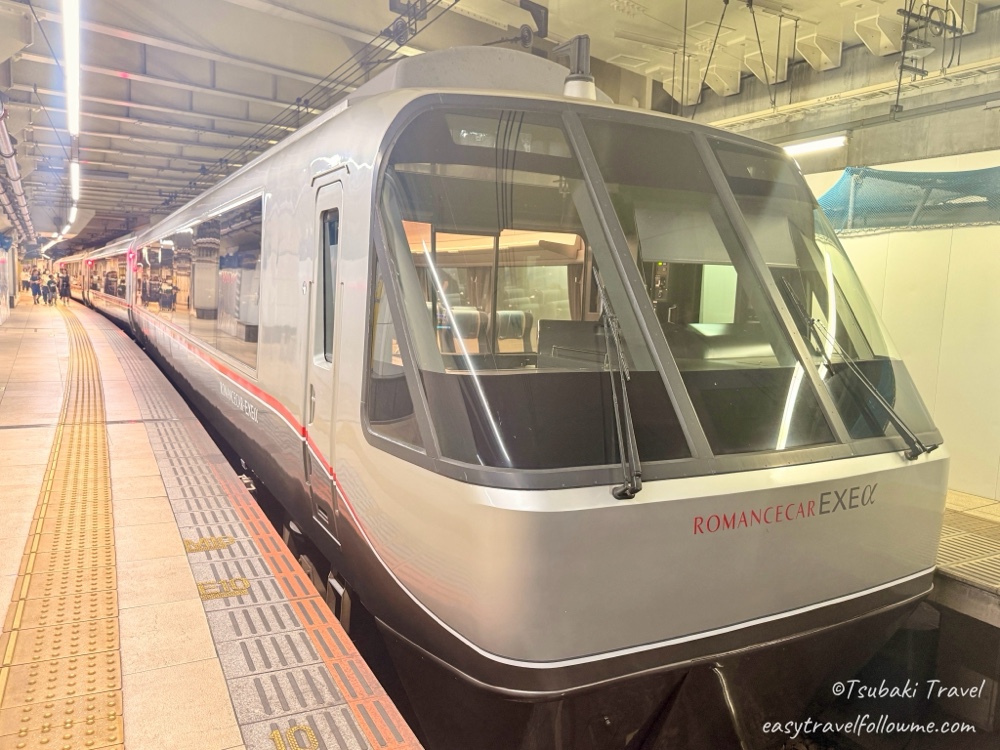
The full route is about 8.9 km and takes approximately 40 minutes. The Romancecar from Shinjuku arrives at the same platform as the Tozan Railway at Hakone-Yumoto, making the transfer very easy.
The train stops at:
・Tounosawa (塔ノ沢)
・Ohiradai (太平台)
・Miyanoshita (宮ノ下)
・Kowakidani (小涌谷)
・Chokoku-no-Mori (彫刻の森)
・Gora (強羅)
An interesting detail: the Hakone Tozan Railway operates with both red vintage-style trains and modern blue trains. The red train feels like a ride back to the Showa era, while the sleek blue train offers a more comfortable and updated experience.

Between Tounosawa and Ohiradai, you’ll pass the Deyama Railway Bridge, a favorite photo spot for train fans.
You might miss it if you blink, but turn around and you’ll catch a breathtaking view of this forest-framed bridge.
Notable Spots Along the Line:
・Tounosawa Station (塔ノ沢駅): Fukazawa Zeniarai Benten Shrine
・Chokoku-no-Mori Station (彫刻の森駅): The Hakone Open-Air Museum
In June, the tracks are lined with blooming hydrangeas, turning the route into a seasonal photo haven.

Hakone-Yumoto → Gora (Hakone Tozan Railway Details)
* 460 JPY (≈ $2.91 USD / £2.19 GBP / €2.59 EUR)
・Route: Hakone-Yumoto ↔ Gora
・Travel time: ~40 minutes (departures every 15 minutes)
・Fare: ¥460 if you ride straight through
・Tickets: Purchase via machine or use IC card
・Free with Hakone Free Pass | Departure schedules available | IC cards accepted
Related Article:
“The Hakone Open-Air Museum Info”
Hakone Tozan Cable Car


This short yet crucial segment of the Hakone Loop connects Gora Station to Sounzan Station. The cable car is built to handle steep slopes, with a staircase-style interior design that adjusts to the mountain terrain.

The line spans just 1.2 km, stopping at five stations along the way:
Kouenshita, Kouenue, Chugora, Jougora, and finally Sounzan, which is the gateway to the Hakone Ropeway.
Attractions Near Each Station:
・Kouenshita: Gora Park
・Kouenue: Hakone Museum of Art
・Sounzan: Cu-mo Hakone (Observation Deck)
The smaller stations are lesser-known and often skipped by tourists. Most people visiting Gora Park or the Hakone Museum of Art simply walk from Gora Station. Otherwise, most passengers ride the cable car straight to Sounzan.

✔️ Gora → Sounzan (Hakone Tozan Cable Car)
* 430 JPY (≈ $2.72 USD / £2.04 GBP / €2.43 EUR)
Route: Gora – Sounzan
Travel Time: Approx. 15 minutes | Runs every 15–30 minutes
Fare: ¥430 if you ride without getting off
Tickets: Available via vending machines
Notes: Free with the Hakone Free Pass | Timetable available | IC cards not accepted
Hakone Ropeway


This iconic segment of the Hakone Round Course is one of the longest ropeways in the world, stretching from Sounzan to the famous Owakudani volcanic valley, and onward to Togendai Station at Lake Ashi. It’s an essential link between Hakone’s top attractions.
From Sounzan to Owakudani, you’ll glide over dramatic volcanic terrain with steaming vents and colorful hillsides.

If you’re traveling from Togendai, you’ll be treated to an incredible panoramic view of Mt. Fuji rising above Lake Ashi, a truly unforgettable sight on clear days.

There are three main stops:
・Owakudani Station: A must-see highlight of the Hakone Loop, home to volcanic vents and the famous black eggs.
・Ubako Station: A quiet stop surrounded by hot spring ryokans, ideal if you want to avoid the crowds and enjoy a peaceful overnight stay.
・Togendai Station: The terminal near Lake Ashi and the pirate ship cruise.

✔️ Sounzan → Owakudani → Togendai (Hakone Ropeway)
* 2,000 JPY (≈ $12.66 USD / £9.50 GBP / €11.28 EUR)
Route: Sounzan – Owakudani – Togendai
Travel Time: Approx. 15 minutes between each station | Runs every 1 minute
Fare:
Sounzan → Owakudani → Togendai:: ¥2,000
Tickets: Purchase via vending machine
Notes: Free with the Hakone Free Pass | IC cards not accepted
❗️Pro Tip:
The section between Owakudani and Ubako offers some of the best views of Mt. Fuji, especially in the morning. Don’t miss it!
Also, after arriving at Sounzan from the cable car, you’ll notice a crowd gathering on the first floor near the ticket machines.
These are travelers without the Free Pass lining up to purchase tickets.
If you already have the Hakone Free Pass, skip the line and go directly to the second floor to board the ropeway, no ticket purchase necessary.
Hakone Sightseeing Cruise (Pirate Ship)

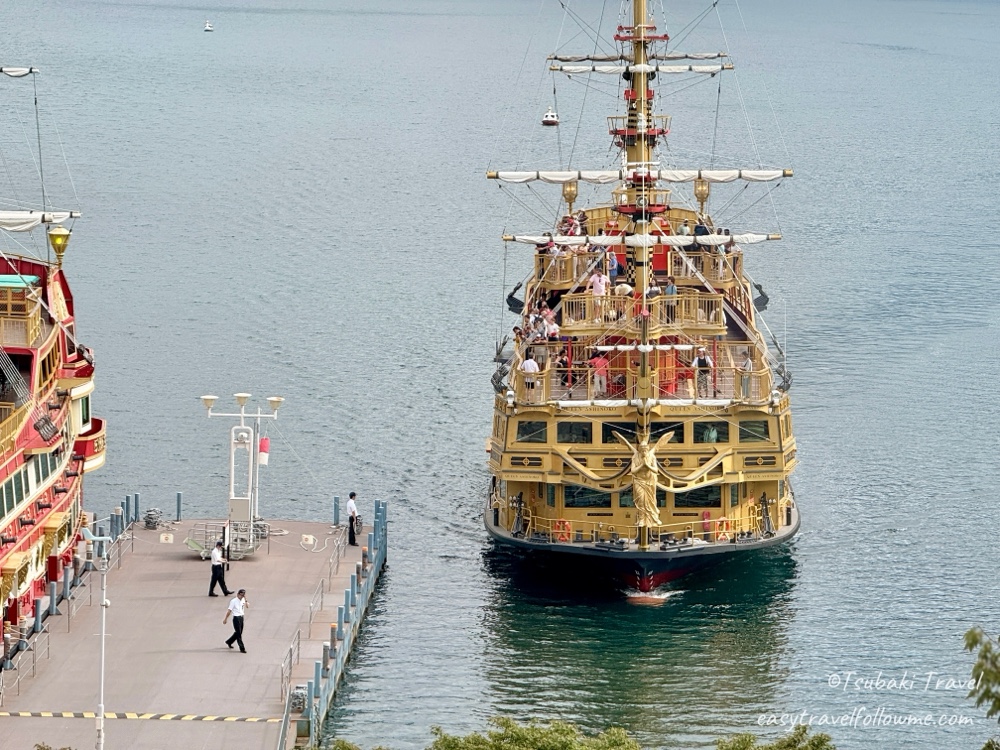
The Hakone Sightseeing Cruise, more commonly known as the Pirate Ship, is one of the most iconic experiences on the Hakone Loop. With its sails, masts, and pirate flag, the ship looks like something straight out of a movie.
Inside, you’ll find 3D art installations and playful pirate-themed interiors that immerse you in the experience.
While cruising across Lake Ashi, passengers can enjoy breathtaking views of Mt. Fuji and the Hakone mountains. There are several ship types and seating classes available, making it a fun and flexible activity for travelers of all ages.

The route forms a scenic loop:
Togendai → Hakone-machi Port → Motohakone Port → Togendai.
Along the way, you’ll sail past landmarks like the Peace Torii of Hakone Shrine, especially stunning in autumn when the lakeside trees turn bright red and orange.
Major Stops & Highlights:
・Motohakone Port: Hakone Shrine, Hakone Checkpoint, Entrance to the Old Tokaido Road
✔️Togendai → Motohakone (Hakone Pirate Ship)
* 1,700 JPY (≈ $10.76 USD / £8.08 GBP / €9.59 EUR)
Route: Togendai – Motohakone Port
Cruise Duration: 25–35 minutes | Departs every 35–40 minutes
Fare: ¥1,700
Tickets: Purchase at the ticket counter
Notes: Free with Hakone Free Pass | IC cards not accepted | Cruise timetable available online
Hakone Tozan Bus

The Hakone Tozan Bus system operates multiple routes that serve nearly all corners of the Hakone Round Course, including:
・The Lake Ashi route (toward Hakone Shrine)
・The Owakudani route
・The Sengokuhara loop
Each route stops at different destinations, allowing travelers to choose the most convenient one based on their plans.
Since Hakone is a high-traffic tourist destination, buses can experience heavy delays during peak seasons, especially in popular areas.
However, buses are extremely helpful if you’re heading to Sengokuhara or planning to return from Motohakone directly to Hakone-Yumoto or Odawara Station, instead of circling back through ropeways and trains.
❗️A heads-up: The seats on the Hakone Tozan Bus are extremely narrow. Even someone like me (me, 158 cm with an average build) found it tight and uncomfortable. If you’re tall or broad-shouldered, be prepared for a bit of a squeeze…

✔️Motohakone port → Hakone-Yumoto (Tozan Bus Route)
* 1,210 JPY (≈ $7.66 USD / £5.75 GBP / €6.82 EUR)
Route: Motohakone – Hakone-Yumoto (Route varies)
Travel Time: Depends on route
Fare: Example: Motohakone to Hakone-Yumoto = ¥1,210
Tickets:
・Free with Hakone Free Pass
・Pay cash on board
・IC cards accepted
Other Info: Free ride with Hakone Free Pass | Live bus arrival info available | IC cards OK
Bonus Tip: How to Ride Buses in Japan

If you’re taking a local bus in Japan, the process is slightly different from trains.
When you board, tap your IC card (like Suica or PASMO) at the entrance.
If you’re not using an IC card, make sure to take a numbered paper ticket (整理券) when you get on.


Each ticket has a number printed on it, which corresponds to your boarding stop.
When you’re ready to get off, look at the digital screen at the front of the bus, it shows the fare next to your number. Then, drop your ticket and exact fare into the fare box next to the driver.
There is a coin changer machine on board if you don’t have exact change, but in Japan, it’s considered polite to prepare your coins in advance, fumbling for change can slow everyone down and may cause a slight traffic jam inside the bus!
Other Useful Services
Baggage Storage
After exiting Hakone-Yumoto Station, you can leave your luggage at the Odakyu Travel Center.
Hours: Open until 19:00
Price: ¥700 per item per day
Luggage Delivery Service
On the first floor of Hakone-Yumoto Station, there’s a luggage delivery counter that can send your suitcase directly to your accommodation on the same day.
On your last day, your hotel or guesthouse can also arrange for your luggage to be sent back to the station counter.
Over 260 properties in the Hakone area are partnered with this convenient service.
Hakone Free Pass holders get ¥100 discount per item
Price:
・Standard size: ¥900
・Large size: ¥1,100
・Oversized: ¥1,600
Quick Travel Tips for Hakone
・A day trip is possible, but staying overnight gives you more time to relax and explore.
・You don’t need to rent a car, public transportation in the Hakone Loop is efficient and scenic.
・Getting around is part of the experience! Riding trains, ropeways, cable cars, and the pirate ship is a big part of the fun.
・In winter, snow is common, if you’re driving, make sure your car has snow tires.
❤︎❤︎❤︎❤︎❤︎ More Hakone Itineraries ❤︎❤︎❤︎❤︎❤︎
If you find independent travel a bit too overwhelming or inconvenient, joining a guided tour can be a great alternative!
It takes the stress out of planning and transportation, so you can simply relax and enjoy everything Hakone has to offer.
Klook.comI hope this complete Hakone transportation guide helps you plan your perfect trip!
Whether you’re doing a one-day adventure or staying overnight, enjoy every ride, every view, and every moment in this beautiful region.
Happy travels! ❤︎
Hakone Transportation FAQ
Where is the best spot to see Mount Fuji during the transit?
The Hakone Ropeway offers the best views. In particular, the section between Owakudani Station and Ubako Station allows you to overlook the magnificent volcanic landscape with Mt. Fuji in the distance. Additionally, you can enjoy the iconic view of Mt. Fuji alongside the lakeside Torii gate while riding the Hakone Sightseeing Cruise (Pirate Ship) on Lake Ashi.
Can I use IC cards (like Suica or PASMO) for all types of transportation in Hakone?
Not for all of them:
Not Accepted: Hakone Tozan Cable Car, Hakone Ropeway, Hakone Sightseeing Cruise. (Note: If you have a Hakone Free Pass, you can enjoy unlimited rides on all the above without using an IC card.)
Accepted: Hakone Tozan Train, Hakone Tozan Bus.
Is it recommended to buy the “Hakone Free Pass”? Is it worth it even for a day trip?
Yes, highly recommended. Even for a day trip, the total cost of a round trip from Shinjuku plus local rides like the Pirate Ship and Ropeway usually exceeds the price of the pass. The current 2-day pass starts at approximately 7,100 JPY (≈ 47 USD). Buying the pass not only saves money but also saves you the hassle of queuing for tickets multiple times.
**********************
Traveler’s Note:
The insights shared above are based on my personal experiences and subjective perspectives. When planning your trip, please consider current weather conditions and your own travel preferences.
Please note that all English articles on this site are AI-assisted translations of the original Traditional Chinese content. While every effort is made to ensure accuracy and natural flow, occasional nuances or expressions may differ. Thank you for your understanding.
In an era dominated by viral trends and “clickbait” locations, my true passion lies in exploring hidden corners and regions where information is scarce. I know firsthand how precious detailed, reliable information is when planning a journey. That is why I dedicate countless hours to research and field exploration, to curate these hard-earned insights for fellow travelers like you.
Every article and image on this site represents a significant investment of time and heart. If this content has helped you, the best way to support me is by sharing or reposting this link. I kindly ask that you respect original creators; unauthorized copying or re-uploading is strictly prohibited (all content is protected under DMCA).
Catch my latest travel moments on Instagram: @287.travel
Fuel my next journey: If my guide made your trip smoother, feel free to [Buy Me a Coffee]. Your support keeps this project moving forward!
Thank you for being a part of this community.

**********************
Klook.com