Last Updated on 2026-03-09 by Tsubaki
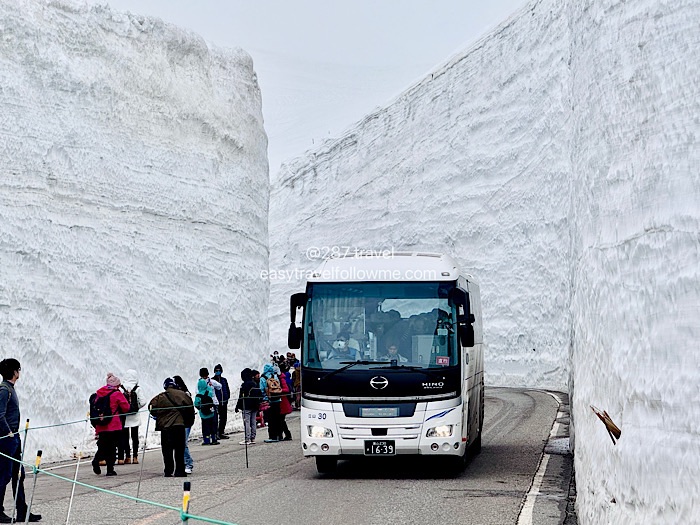
Hi! I’m Tsubaki, a freelance contributing travel journalist who has lived in Japan for 10 years! How to visit Tateyama Kurobe ? When people think of Nagano, Japan, the iconic snow walls of the Tateyama Kurobe often come to mind, and rightfully so. These towering white corridors are among the most famous sights on this scenic route.
But Tateyama Kurobe has much more to offer than just snow walls. From panoramic mountain views and dam landscapes to alpine flora, the entire journey is packed with breathtaking sights, all concentrated along what’s known as the Tateyama Kurobe Alpine Route.
That said
this route isn’t your typical sightseeing destination that you can easily drop by on a whim. It crosses multiple mountain ranges from west to east, spanning Tateyama to Kurobe Gorge, and is completely closed to private vehicles. To complete the route, travelers must navigate up to six different types of transportation. Which can be overwhelming if you’re visiting for the first time. On top of that, the Tateyama Kurobe area is only open seasonally, and during peak periods like the snow corridor season or fall foliage season, transport tickets sell out in seconds online.
My boyfriend and I are usually spontaneous travelers. One time, I suddenly suggested, “How about going to Tateyama Kurobe next weekend to see the snow walls?”. We were just about to book a hotel when we realized… . This is not the kind of destination you can just decide on last-minute. A lot of details need to be carefully planned in advance. To avoid getting tripped up, it’s essential to understand some key information before setting out.
Although the official Tateyama Kurobe Alpine Route website is hands down one of the most comprehensive tourism sites I’ve seen, some aspects are still hard to grasp at a glance. That’s why in this article, Tsubaki will walk you through all the must-know tips and preparations based on my own experience. Because there’s so much to cover, like transportation, tickets, itinerary tips, and seasonal highlights. I’ve divided everything into different chapters for easier reading.
This article is your all-in-one pre-departure summary
giving you a broad overview of what to expect and how to get started, how to visit Tateyama Kurobe . If you’d like to dive deeper into any topic, check out the internal links to the corresponding detailed guides. For parts not yet published, stay tuned, I’m updating them one by one! And if you have an urgent question, feel free to DM me on Tsubaki’s Instagram!
★ Suggested Reading for Tateyama Kurobe:
“Introduction to Tateyama Kurobe Travel“
“Opening Times, Seasons, and clothes“
“Tateyama Kurobe Transport Guide & Notes“
“Ticket Booking Methods and Precautions“
Switch language:繁體中文
The Tateyama Kurobe Route is Not Open Year-Round

First, let’s talk timing. The Tateyama Kurobe Alpine Route (立山黒部アルペンルート) is not accessible year-round. Due to heavy snowfall, the route is completely closed in winter and only reopens in spring after snowplows have cleared the roads.
Typically, the open season runs from mid-April to late November, about seven and a half months. However, the exact dates can change depending on weather and snow conditions. That’s why it’s absolutely critical to check the official website for the latest opening details before planning your trip.
We’ll cover more about the opening periods, what each season offers, and what to wear in “Tateyama Kurobe Opening Period & Best Seasons“.
No Private Cars Allowed in Core Scenic Area, Public Transport Required

Once you’ve confirmed that the route is open, the next big thing to understand is transportation. As mentioned earlier, the core attractions of the Tateyama Kurobe trip lie along the Alpine Route. Which stretches from Tateyama (Toyama side) to Ogisawa (Nagano side).
Whether you’re on a tour or traveling independently, you must switch to official transport options (like the Tateyama Cable Car, Highland Bus, electric trolley bus, etc.) to traverse the route. And it’s not cheap. Completing the full stretch between Tateyama and Ogisawa costs about ¥10,940.
* 10,940 JPY (≈ $69.25 USD / £51.97 GBP / €61.70 EUR)Key Stations:
・Murodo – The highest point and main attraction
・Tateyama – Starting point on the Toyama side
・Ogisawa – Endpoint on the Nagano side
If you’re coming from the Kansai region using public transport, definitely consider the JR Alpine-Takayama-Matsumoto Area Pass. This pass offers unlimited rides on local and limited express trains, plus free rides along the Alpine Route, all for just ¥24,000! (Also available on Klook)
* 24,000 JPY (≈ $151.92 USD / £114.00 GBP / €135.36 EUR)If you plan to drive, note that you’ll need to park at the designated lot closest to the route and decide whether you’ll return to your starting point or go all the way through to the opposite side. If it’s the latter, you’ll need to book a vehicle return service in advance. (not cheap, I’ll cover that in another article).
Also, you’ll need to choose your starting direction:
・From Tateyama (Toyama side) – Ideal for travelers coming from Kansai
・From Ogisawa (Nagano side) – Best for those coming from Kanto
Most tourists and group tours start from the Tateyama side, so the Ogisawa side is generally less crowded.
Can’t remember all the station names? That’s okay. But at the very least, try to remember these three:
・Tateyama (Toyama side)
・Ogisawa (Nagano side)
・Murodo (mountaintop area)
You’ll see them frequently while planning your trip, so keep them in mind!
I’ll go over all the details about transport types, costs, and special discount tickets in “Tateyama Kurobe Transport Guide“.
JR Alpine-Takayama-Matsumoto Area Tourist Pass
Validity: 5 consecutive days
Price: ¥24,000
Coverage: Includes JR transportation in Nagoya, Matsumoto, and Takayama areas + full access to the Alpine Route.
Eligibility: Limited to non-Japanese passport holders with “Temporary Visitor” status for sightseeing purposes.>> Purchase Online:
* 24,000 JPY (≈ $151.92 USD / £114.00 GBP / €135.36 EUR)
[JR Pass Official Website] | [KKday] | [Klook]
(Note: Discounts vary by period; it is recommended to compare prices across different platforms.)
The Alpine Route is Extremely Popular—Tickets Sell Out Fast

During peak seasons, tickets for the Tateyama Kurobe Alpine Route can be nearly impossible to get. Especially during the snow corridor opening in spring and the autumn foliage season. If you show up without a reservation, there’s a high chance you won’t get a ticket, which could throw off your entire itinerary. That’s why I strongly recommend booking your tickets online in advance if you’re planning a DIY trip.
That said, there’s a downside to online reservations: if you want to change your travel date, you’ll have to cancel your existing booking and start over. Given how high the demand is, cancelling often means you won’t be able to book your preferred time slot again, making it difficult to adjust your plans based on the weather or personal schedule.
Still, if you find yourself needing to change your departure time at the last minute, you can try asking at the station to see if an earlier time slot is available. Just keep in mind that on busy days, there’s no guarantee you’ll get your ideal time. Even if you do, you’ll need to pay a ¥500 (~$3.25 USD) change fee per person.
For a full breakdown of ticket booking tips, precautions, and the reservation process, check out “Tateyama Kurobe Alpine Route Tickets Guide“!
Route Planning and Expenses Along the Alpine Route

If you’re planning a one-day trip and want to see as much as possible within limited time, it’s crucial to understand where the key sights are, how long to stay at each, and how to structure your route. The main expenses to consider are:
・Transportation to/from the start or end points of the Alpine Route
・The Alpine Route transit pass, which typically costs between ¥10,000–¥20,000.
Although the entire route lies at elevations above 1,000 meters, the infrastructure is very tourist-friendly, with most segments covered by public transportation. So it’s not physically demanding like an actual mountain trek. That said, there are plenty of hiking trails along the way, so if you’re into outdoor activities, feel free to incorporate short hikes into your itinerary.
If you’re visiting in spring, keep in mind that some trails may still be snow-covered, so crampons or anti-slip gear are highly recommended for safety.
If you think Tateyama Kurobe deserves more than a day, consider making it a two-day-one-night trip by staying at a mountain lodge like the Tateyama Hotel. Also, some facilities or attractions operate seasonally, so be sure to check their opening status before you go.
Since restaurants and shops on the mountain are limited, I suggest grabbing some food and snacks at a convenience store before heading up. So you don’t waste time queuing in the mountains.
I’ll be covering recommended stops, estimated time at each point, and our full one-day itinerary with costs in Chapters 5 and 6!
The official tourism brochures are also available (in Japanese only)(link to official guide)
An Easier Option: Join a Tour
If this all sounds a bit overwhelming and you’re thinking, “Maybe this is too much hassle,” then joining a tour on KKday, Klook, Get your guide might be a better fit. These platforms offer day trips and overnight packages, which include transport and sometimes accommodation.
The prices are comparable to what you’d spend on public transportation, and the bonus is, you get to rest on the tour bus. Some packages even include stops at Shirakawa-go or Kamikochi.
Klook.comCheck Tateyama Kurobe Alpe Route Guide
・ KKday
・Klook
・Get your guide
That wraps up Tsubaki’s essential pre-departure guide about How to visit Tateyama Kurobe! I hope this article helps you plan a smoother, more enjoyable trip. Be sure to check out the other chapters for more in-depth tips and personal insights!
★ Suggested Reading for Tateyama Kurobe:
“Introduction to Tateyama Kurobe Travel“
“Opening Times, Seasons, and clothes“
“Tateyama Kurobe Transport Guide & Notes“
“Ticket Booking Methods and Precautions“
**********************
Traveler’s Note:
The insights shared above are based on my personal experiences and subjective perspectives. When planning your trip, please consider current weather conditions and your own travel preferences.
Please note that all English articles on this site are AI-assisted translations of the original Traditional Chinese content. While every effort is made to ensure accuracy and natural flow, occasional nuances or expressions may differ. Thank you for your understanding.
In an era dominated by viral trends and “clickbait” locations, my true passion lies in exploring hidden corners and regions where information is scarce. I know firsthand how precious detailed, reliable information is when planning a journey. That is why I dedicate countless hours to research and field exploration, to curate these hard-earned insights for fellow travelers like you.
Every article and image on this site represents a significant investment of time and heart. If this content has helped you, the best way to support me is by sharing or reposting this link. I kindly ask that you respect original creators; unauthorized copying or re-uploading is strictly prohibited (all content is protected under DMCA).
Catch my latest travel moments on Instagram: @287.travel
Fuel my next journey: If my guide made your trip smoother, feel free to [Buy Me a Coffee]. Your support keeps this project moving forward!
Thank you for being a part of this community.

**********************
Klook.com