Last Updated on 2026-03-01 by Tsubaki
The Tateyama Kurobe Alpine Route (立山黒部アルペンルート) is one of Japan’s most spectacular high-mountain sightseeing routes. Open only for a limited period each year, it attracts countless visitors eager to admire its breathtaking snowy landscapes, go hiking, and experience the beauty of all four seasons.
In the previous article, Chapter 1 covered all the essential information you should know before planning your Tateyama Kurobe trip. This chapter focuses on the opening period of the Tateyama Kurobe route, the seasonal highlights and outfit recommendations, as well as how to check weather conditions before your visit. This guide covers the opening period, seasonal highlights & weather tips. You’ll have a clearer idea of when to plan your trip for the best experience.
If you’d like to learn more about Tateyama Kurobe travel planning, be sure to check out the other chapters for more detailed information!
★ Suggested Reading for Tateyama Kurobe:
“Introduction to Tateyama Kurobe Travel“
“Opening Times, Seasons, and clothes“
“Tateyama Kurobe Transport Guide & Notes“
“Ticket Booking Methods and Precautions“
Switch language:繁體中文
Tateyama Kurobe Opening Period
When planning a trip to the Tateyama Kurobe area, the very first thing you need to check is the official Tateyama Kurobe Opening Period. Whether you’re traveling independently or joining a tour group, this route is only accessible during a limited season each year. If you miss the window, there’s no way in!
My boyfriend and I am the kind of travelers who often take spontaneous trips. One day, we suddenly thought, “Want to hit up Tateyama Kurobe next week?” What we didn’t realize at the time was that the entire route is not open year-round. A quick search told us we were only in the first week of April, and of course, the route hadn’t opened yet. Luckily, we hadn’t booked a hotel yet, otherwise, it would’ve been a wasted trip.
This experience reminded us that many of Japan’s high-altitude routes, unlike regular sightseeing spots, require advance research into both Tateyama Kurobe Opening Period and accessibility. Another good example is Kamikochi, a popular destination not far from Tateyama Kurobe, which follows a similar seasonal pattern.
Can You Visit in Winter? Tateyama Kurobe Opening Period

Due to the extreme snow accumulation along the Tateyama Kurobe Alpine Route during winter, a tremendous amount of time and manpower is required to clear the snow each year. As a result, the route is only open after the snow removal is completed and before the next heavy snowfall begins. Typically, Tateyama Kurobe Opening Period starts in mid-April and ends in late November, though the exact opening and closing dates may shift slightly depending on that year’s weather conditions.
That’s why it’s highly recommended to check the latest updates on the official Tateyama Kurobe website before your trip. This will help you avoid the frustration of making all your plans only to find out the route isn’t accessible yet. Even if the route is officially open, operations may still be suspended temporarily due to snowstorms or strong winds.
Take our visit in 2025 as an example: although the route was scheduled to open from April 15 to November 30, reports from other travelers indicated that cable car service on the Tateyama (Toyama) side was suspended for the first two days due to strong winds, affecting many people’s itineraries. In contrast, the Ogizawa side (Nagano) had more stable weather, and visitors could still reach Murodo and return from there.
Tateyama Kurobe Opening Period in Recent Years
・2024 Season: April 15 (Mon) – November 30 (Sat)
・2025 Season: April 15 (Tue) – November 30 (Sun)
(Note: Operations on the Tateyama side didn’t begin until April 18 due to strong winds.)
Official Website: Tateyama Kurobe Alpine Route
(The homepage usually displays official Tateyama Kurobe Opening Period.)
If you’re not familiar with the full Alpine Route, check out Chapter 1 for a full route overview, or refer to the transport section on the official website.
[How to Plan Your Tateyama Kurobe Trip]
Earliest & Latest Operating Sections

In most years, both the Tateyama and Ogizawa sides open around the same time. However, depending on the weather, it’s not uncommon for the Ogizawa–Murodo section to open earlier.
For example, when the weather on the Ogizawa side is stable with light winds, it may be safe to start operating earlier. That said, as mentioned above, even if both sides are officially open, services may be suspended temporarily if the weather turns bad, especially on the Tateyama side, which is more affected by strong winds that can halt cable car service.
By late November, the region typically enters full snow season again, and most transportation services and visitor facilities begin shutting down. If you’re planning to visit in late autumn, it’s especially important to keep your itinerary flexible and monitor the official announcements closely!
How Much Time Do You Need for a One-Day Trip?
Simply riding all the transport segments along the Tateyama Kurobe Alpine Route takes time. One-way travel including transfers and waiting can take around 2 hours, with the return trip taking another 1.5 hours. If you add time for sightseeing, photos, and a meal, you’ll want to budget at least 5 hours for the whole trip to avoid feeling rushed or missing key highlights.
During our visit this year, we initially only managed to grab 12:30 PM tickets departing from Ogizawa, but the last return from Murodo was at 3:30 PM. We were worried that just getting there and back would take up the entire time, leaving little room to explore.
Thankfully, we arrived early and were able to switch to an earlier departure. We ended up boarding the 10:00 AM bus from Ogizawa, and arrived at Murodo (the site of the famous Snow Wall) around noon. Although the weather was poor and we couldn’t stop at other stations, we made the most of our time admiring the snow corridor before returning to Ogizawa at 3:20 PM.
Even without taking a walk or spending long at each stop, the total journey, including transport, sightseeing, and waiting, took nearly 5.5 hours. So even for a “quick” day trip, careful planning of your transportation schedule is essential!
Related article
[How to book Tateyama Kurobe Transportation]
When Is the Best Time to Visit Tateyama Kurobe? Seasonal Highlights & What to Wear
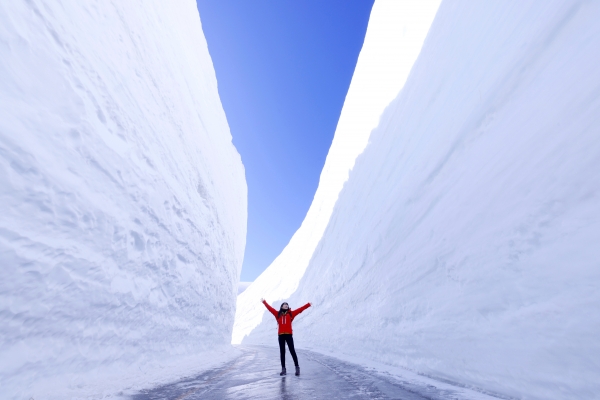
The Tateyama Kurobe Alpine Route officially opens in mid-to-late April, and during this early spring period, much of the route is still covered in deep snow. This is also when you can experience the iconic Snow Corridor (Yuki no Otani), a massive snow wall towering up to 16 meters high. Besides the snow wall, spring also features seasonal highlights like the Snow Tunnel (Yuki no Tonneru), which can only be seen during the snowy period.
As the snow melts and the seasons transition into summer, the mountains turn lush and green. By autumn, the area is transformed into a sea of fiery red foliage, especially around popular spots like Mikurigaike Pond, making it another peak travel season.
That said, not all sights are accessible right away during the early spring opening. Some trails and scenic areas remain buried under snow until much later. So it’s a good idea to learn about the unique features of each season before deciding when to go!
Here’s a breakdown of each season’s highlights and recommended outfits, so you can plan your visit accordingly:
Spring (Mid-April to June)|Snow Corridor Season

Typical Spring Temperatures
| Month | April | May | June |
|---|---|---|---|
| High | 6°C | 10°C | 14°C |
| Low | -3°C | 3°C | 7°C |
What to See

In spring, Tateyama Kurobe’s most iconic highlight is the towering snow wall at Murodo. Just standing at the base of the massive white wall, sometimes higher than a two-story building, is already worth the trip. It’s no surprise that this has become one of the most photographed spots among visitors traveling to Japan’s Chubu region.

However, when we visited in mid-April, we realized that many other scenic spots were still closed due to snow, including Mikurigaike Pond, Jigokudani (Hell Valley), and even the walkways around Kurobe Dam. It was a bit disappointing not to be able to explore beyond the snow wall.
So, if you’re hoping to enjoy both the snow wall and other sights, the official recommendation is to visit in June. By then, the snow wall is still impressively high (around 10 meters), but the weather is more stable, the crowds are smaller, and more areas are accessible, making it the perfect balance between scenery and comfort.
Spring Weather & What to Wear

As you ascend higher along the Alpine Route, especially near Murodo Station, the temperature drops sharply, sometimes dipping below freezing. The snow may not have fully melted, and strong winds are common. It honestly feels like you’re still in the middle of winter.
But here’s the twist: the base of the mountain is much warmer. This means you’ll experience huge temperature swings along the route. That’s why we highly recommend dressing in layers, also known as the “onion style”, so you can easily add or remove clothing as needed.
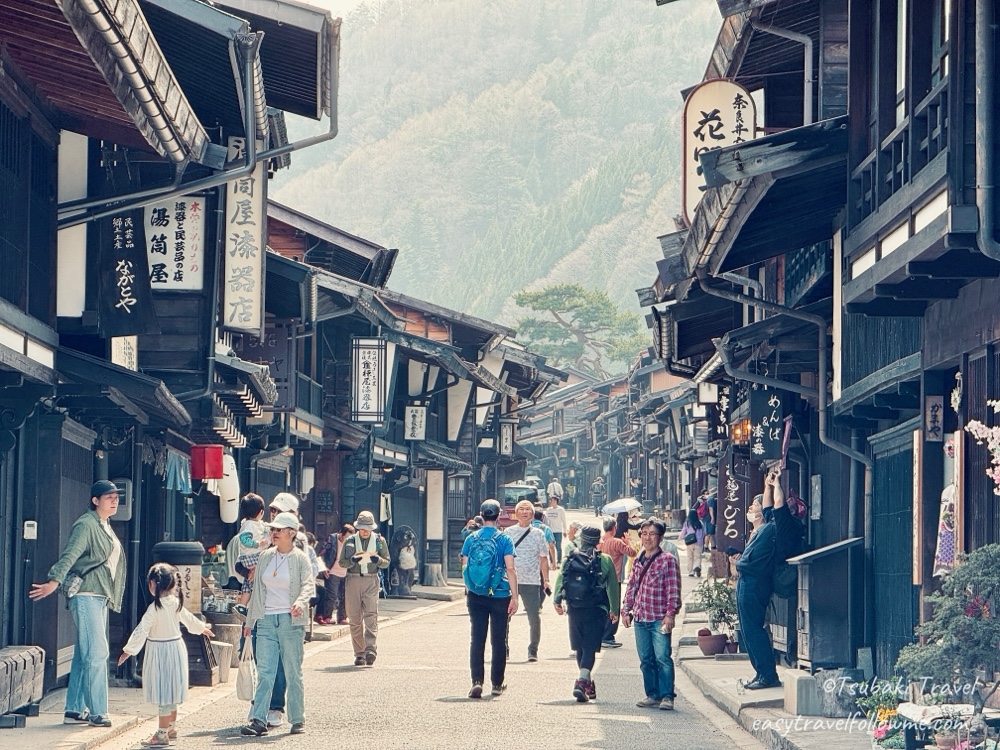
When we visited during the first week of the season, we started our trip in Hida-Takayama and Narai-juku, where it was sunny and warm enough to wear short sleeves. But as we climbed toward Murodo, the temperature steadily dropped. By the time we reached the top, it was around 3°C to 6°C, and we were layering up all the way to down jackets. It really drove home just how crucial proper layering is.
Also, keep in mind that many parts of the trail are still covered in melting snow, making it wet and slippery. It’s best to wear anti-slip hiking shoes and bring along mini crampons for better traction. And don’t forget your sunglasses, snow under direct sunlight is blindingly bright. Sunglasses are absolutely essential for eye protection in springtime snow!
Recommended Spring Clothing for Tateyama Kurobe
・Outer Layer: Windproof and waterproof jacket or lightweight down jacket (preferably packable)
・Mid Layer: Fleece, thermal wear, or insulated sweaters (adjust based on your personal comfort)
・Bottoms: Warm hiking pants or thermal leggings under trekking pants
・Shoes: Anti-slip hiking boots or snow shoes (must handle wet snow and slush)
・Accessories: Beanie, gloves, scarf, sunglasses, sunscreen, hand warmers
・Optional: Mini crampons or anti-slip cleats
If you’re just doing light sightseeing or walking on snowy trails, a basic pair of crampons will be enough.
Summer (July–August)|Hiking Season in the Alps
Typical Temperatures
| Month | July | August |
| High | 16°C | 18°C |
| Low | 11°C | 12°C |
What to See

Summer is one of the best times to visit Tateyama Kurobe if you’re looking for an easy, refreshing getaway. The highland climate stays pleasantly cool, making it a popular summer escape for Japanese locals. Compared to the crowded snow season in spring or the foliage rush in autumn, summer tends to be more relaxed and peaceful.
The hiking trails around Murodo Plain are particularly beginner-friendly, offering wide-open alpine meadows dotted with wildflowers and a soothing, expansive landscape. Don’t forget to download the Tateyama/Murodo Walking Map in advance to help plan your route!
This is also when the snowmelt from the Alps begins to feed Kurobe Lake, and the Kurobe Dam begins its annual water discharge. Watching the massive torrents of water gushing out in person is an unforgettable experience. While you’re there, check out the dam museum or take a ride on the sightseeing boat for a closer look at this incredible engineering feat.
If you have more time, make a detour to explore Midagahara wetlands or hike to Shomyo Falls, you won’t regret it!
Summer Weather & What to Wear

Despite being summer, temperatures in the high mountain zones like Murodo remain cool, with daytime highs often just in the low teens Celsius. You definitely won’t be feeling the typical summer heat up here! That’s why layered clothing (onion-style) is still the way to go, you’ll want to adjust easily to fluctuating conditions as you hike.
Also, note that afternoon thunderstorms are quite common in summer, especially in the mountains. The weather can turn from sunny to stormy in a flash, so always bring a light raincoat or waterproof jacket, and check the weather forecast before you head out!
Recommended Summer Gear:
・Outer layer: Light windbreaker or rain jacket
・Mid layer: Long-sleeve moisture-wicking or quick-dry shirt
・Bottoms: Hiking or quick-dry pants (long pants recommended for insect protection)
・Shoes: Hiking boots or non-slip athletic shoes
・Accessories: Sun hat, sunscreen, sunglasses, trekking poles
Autumn (September–October)|Stunning Fall Colors
Typical Temperatures
| Month | September | October | November |
| High | 15°C | 10°C | 2°C |
| Low | 9°C | 3°C | -5°C |
What to See

If you’re a fan of fall foliage, you’ll absolutely fall in love with Tateyama Kurobe in autumn. From late September, the leaves start to change, reaching their peak around mid-October. It’s a favorite season for hikers, campers, and photographers alike.
One of the most unique aspects of the route is its massive change in elevation, which creates a layered, cinematic transition of seasons, all in one day. At the base of the mountain, you’ll still see green summer scenery; the midsection is full of fiery red and orange hues; and the summit may already be dusted with early snow. It’s like watching summer, fall, and winter unfold at once.

If your main goal is to see peak foliage, mid-October is your best bet. But if you’d prefer to avoid the crowds, early or late October on a weekday is a smart choice. Be sure to add a scenic walk, like Midagahara wetlands or the Shomyo Falls trail, to your itinerary for an even more rewarding autumn experience.
⚠️ Heads-up: By early November, high-altitude areas like Murodo may already start receiving snowfall, and many transportation services begin winding down for the season. Plan accordingly to avoid getting stuck in inaccessible zones!
Autumn Weather & What to Wear

Autumn weather is generally clear and comfortable, but the temperature drops dramatically in the mornings and evenings, especially from late October. Places like Murodo may even see early snowfall, with dry, cold air and strong winds making it feel much colder than the forecast.
We strongly recommend bringing enough warm layers, especially a windproof outer shell. Don’t underestimate the importance of non-slip footwear, some trails can get icy. Also, don’t forget your scarf, hat, gloves, and maybe a couple of hand warmers for extra comfort!
Recommended Autumn Gear:
・Outer layer: Thick coat or windproof jacket
・Mid layer: Sweater or insulated midlayer
・Bottoms: Thick pants or thermal leggings under outer pants
・Shoes: Hiking boots with good grip
・Accessories: Hat, gloves, scarf, hand warmers
So, When Is the Best Time to Visit Tateyama Kurobe?
If you’re wondering when to go, the answer really depends on what kind of scenery you’re looking for:
Want to see the massive snow wall? → Mid-April to May is the best time
Prefer lush nature walks and fewer crowds? → July to August is ideal
Love autumn leaves and dramatic color gradients? → Late September to mid-October
Seeking a peaceful, quiet experience? → Late October until the season closes
Each season at Tateyama Kurobe offers a completely different vibe. Choose the one that inspires you the most, and that’s your perfect time to go!
How to Check Real-Time Weather Conditions for Tateyama Kurobe
Check Japanese Weather Websites
If you want to know the current temperature, precipitation, wind speed, and weather alerts for the Tateyama Kurobe area, the easiest way is to use Japanese weather websites like the Japan Meteorological Agency or major forecast platforms.
Simply type in keywords like “立山黒部” (Tateyama Kurobe) and you’ll find detailed updates on current and hourly conditions.
Here are some recommended weather sites:
tenki.jp – Japan’s largest weather platform
ウェザーニュース – Another reliable forecast site
Tateyama Kurobe Official Site – Often features daily weather updates for the route
Many of these platforms now offer English and other language options, making it easier for international travelers to use. Since mountain weather can change rapidly, it’s best to check the forecast for several days in a row before your trip and be ready to adjust your clothing and itinerary accordingly.
Watch Live Cams from Tateyama Kurobe
In addition to weather forecasts, checking the live camera feeds is a must! Mountain weather is notoriously unpredictable, sometimes the forecast says “clear skies,” but when you get there it’s completely foggy. Live images let you instantly confirm the visibility, snow coverage, and overall weather in real time.
Below are some useful live camera feeds from key spots along the Tateyama Kurobe Alpine Route. Whether you’re doing pre-trip planning or adjusting plans mid-trip, these are incredibly helpful:
Murodo (室堂平)
Daikanbo (大観峰)
Midagahara (弥陀ヶ原)
Kurobedaira (黒部平)
Kurobe Dam (黒部ダム) – Live feed available during operating season only
Tateyama Summit (立山山頂)
The Tateyama Kurobe Alpine Route offers a completely different experience in each season, whether it’s walking through the towering snow wall, hiking in alpine meadows, or chasing autumn foliage. No matter when you go, it’s a destination full of unforgettable moments.
Just remember to:
・Match your trip to the season and scenery you want to experience
・Choose the right transport pass or combination ticket for the route
・Monitor weather conditions and adjust your schedule or gear accordingly
Hope your trip to Tateyama Kurobe is filled with amazing memories!
★ Suggested Reading for Tateyama Kurobe:
“Introduction to Tateyama Kurobe Travel“
“Opening Times, Seasons, and clothes“
“Tateyama Kurobe Transport Guide & Notes“
“Ticket Booking Methods and Precautions“
**********************************
Traveler’s Note:
The insights shared above are based on my personal experiences and subjective perspectives. When planning your trip, please consider current weather conditions and your own travel preferences.
Please note that all English articles on this site are AI-assisted translations of the original Traditional Chinese content. While every effort is made to ensure accuracy and natural flow, occasional nuances or expressions may differ. Thank you for your understanding.
In an era dominated by viral trends and “clickbait” locations, my true passion lies in exploring hidden corners and regions where information is scarce. I know firsthand how precious detailed, reliable information is when planning a journey. That is why I dedicate countless hours to research and field exploration, to curate these hard-earned insights for fellow travelers like you.
Every article and image on this site represents a significant investment of time and heart. If this content has helped you, the best way to support me is by sharing or reposting this link. I kindly ask that you respect original creators; unauthorized copying or re-uploading is strictly prohibited (all content is protected under DMCA).
Catch my latest travel moments on Instagram: @287.travel
Fuel my next journey: If my guide made your trip smoother, feel free to [Buy Me a Coffee]. Your support keeps this project moving forward!
Thank you for being a part of this community.

**********************************