Last Updated on 2026-03-01 by Tsubaki
I’ve visited Hakone about five times, two overnight stays and three day trips from Tokyo. While I often follow a similar route each time, every trip brings new memories depending on who I’m with. Hakone is just that kind of place: comfortable, easy to get to, and perfect for a short escape from Tokyo. With smooth transport options and fresh mountain air, it’s ideal for those looking for a relaxing day out in nature.
In this post, I’ll share my recommended one-day Hakone loop itinerary, including the full schedule, actual transportation costs, and a few handy tips for planning. If you’re looking for more details on transportation passes or alternative routes, check out my other related articles linked at the bottom!
Switch language:繁體中文
One-Day Hakone Itinerary: The Classic Loop at a Glance

If it’s your first time visiting Hakone, the easiest and most stress-free option is to follow the classic loop route recommended by the official Hakone Tourism site. This route is perfectly timed with connections between each mode of transport, no confusing transfers or guesswork, making it ideal for first-time travelers to Japan.
Here’s a rough overview of the One-Day Hakone Itinerary flow:
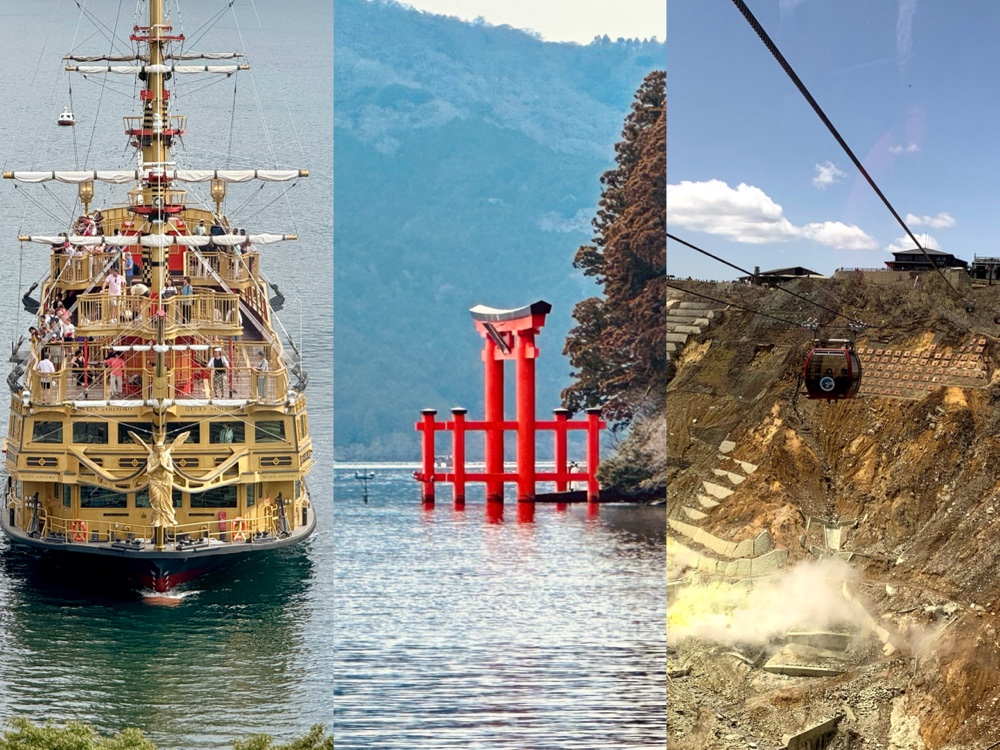
Shinjuku Station → Hakone-Yumoto → Gora → Sounzan → Owakudani → Togendai → Lake Ashi sightseeing cruise to Motohakone-ko → Walk to Hakone Shrine → Bus back to Hakone-Yumoto → Explore the onsen town → Return to Tokyo
Best of all? The Hakone Free Pass covers nearly the entire route, making it a super cost-effective and convenient option. I highly recommend getting the pass for a smoother trip!
Related Articles
[The Complete Guide to Buying and Using the Hakone Free Pass]
[Hakone Transportation Made Easy: Getting Around the Hakone Area]
Detailed One-Day Hakone Itinerary
・Pick up your tickets and board the Odakyu Romancecar from Shinjuku Station to Hakone-Yumoto Station (approx. 1.5 hours)
・Transfer to the Hakone Tozan Railway, from Hakone-Yumoto to Gora (approx. 40 mins)
・Take the Hakone Tozan Cable Car from Gora to Sounzan (approx. 10 mins)
・At the top of Sounzan, take a short break, try a footbath and a local milkshake
・Line up for the Hakone Ropeway and ride from Sounzan to Owakudani (approx. 15 mins)
・Enjoy panoramic views of volcanic landscapes from the ropeway
・Arrive at Owakudani, explore the volcanic area, and try the famous black eggs and black curry bread
・Continue on the Ropeway from Owakudani to Togendai (approx. 16 mins)
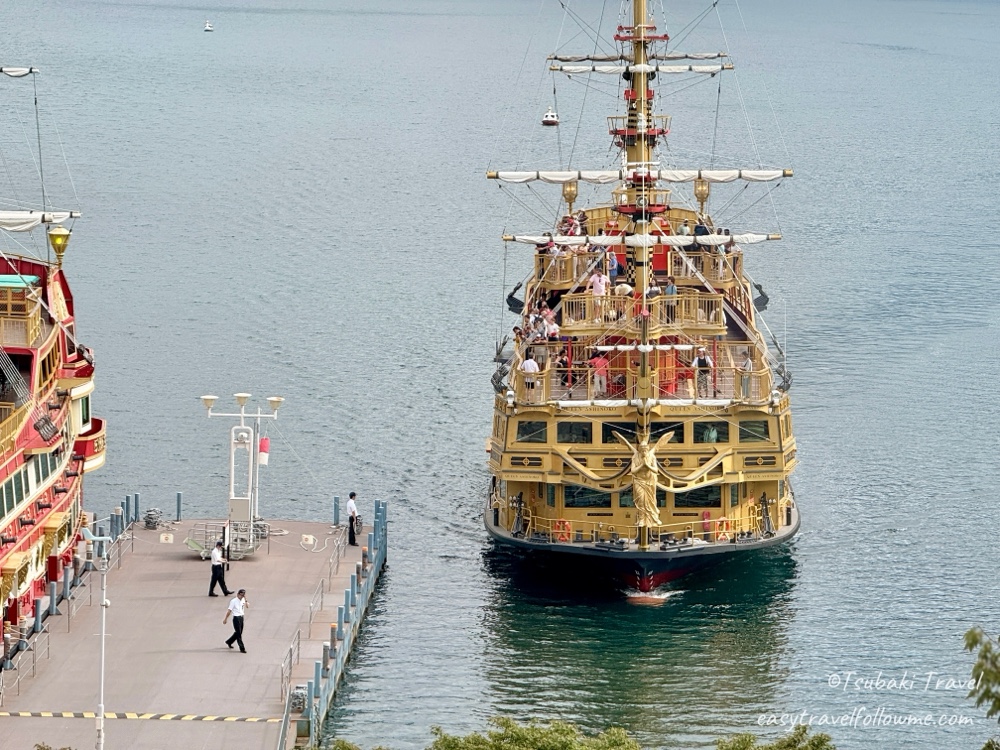
・Board the Hakone Pirate Sightseeing Cruise from Togendai to Motohakone-ko (approx. 40 mins)
・Lunch near Motohakone-ko
・Walk round-trip to Hakone Shrine to see the iconic lakeside torii gate (approx. 30–40 mins)
・Take the Hakone Tozan Bus back to Hakone-Yumoto Station (approx. 30 mins)
・Stroll through the Hakone-Yumoto onsen shopping street, try local snacks, and browse souvenir shops
As you can probably tell, a large portion of your time in Hakone will be spent moving between places. That’s just the nature of this scenic route, and I’ll admit it upfront! If you’d prefer to slow down the pace or reduce transfers, you might consider renting a car or staying overnight.
But based on my many visits, weekend traffic in Hakone can be brutal, so unless you’re used to driving in Japan, I still recommend using public transportation for a smoother and less stressful experience.
Bonus Tips:
Even though this is a one-day round trip, the total cost of transportation from Tokyo is already covered if you use the Hakone Free Pass, it’s definitely worth the money.
Even with the Hakone Free Pass, you still need to pay separately for a reserved seat on the Odakyu Romancecar. The limited express fee is around ¥1,200 (approx. $8 USD) per person.
More Hakone Travel Tips
[Hakone Free Pass: E-Ticket vs. Physical Ticket Comparison]
[Is the Hakone Free Pass Worth It? Full Cost Breakdown & Analysis]
[The Fastest Way from Shinjuku to Hakone-Yumoto: A Detailed Guide to the Romancecar]
One-Day Hakone Itinerary,: Step-by-Step Highlights
Ride the Odakyu Romancecar from Shinjuku to Hakone-Yumoto Station


If you’re using a physical Hakone Free Pass, you’ll typically pick it up at the Odakyu Sightseeing Service Center inside Shinjuku Station. Once you’ve got your ticket, simply scan the QR code at the gate to enter the platform.
After entering the Odakyu line area, you’ll see dedicated platforms 2 and 3 clearly marked for the “Limited Express Romancecar”. Just follow the signs, it’s all very easy to navigate.


There’s also a convenience store on the platform, which is great if you were rushing out the door and didn’t have time for breakfast. I grabbed a rice ball before boarding and had it as brunch on the train, a quick way to recharge and save time.
There aren’t many food stops until you reach Sounzan or Owakudani, so it’s a good idea to grab something before you go, especially since it’ll be another 3 to 4 hours before your next real break
[A Detailed Guide to the Romancecar]
Take the Hakone Tozan Railway from Hakone-Yumoto to Gora (approx. 40 min)

Once you get off the Romancecar, you don’t even need to exit the station, just transfer directly on the same platform to the Hakone Tozan Railway. Trains heading toward Gora and Sounzan usually depart from Platform 3, and the transfer route is clearly marked.
If you’re not in a hurry (and your stomach’s rumbling), you could also take a short detour out of the station to explore the Hakone-Yumoto onsen town, grab a snack, and soak in the local vibes before continuing.
Due to Hakone’s unique volcanic terrain, most of its transportation infrastructure, like trains, cable cars, and buses, is built to handle steep inclines. That’s why so many of them have “Tozan” (meaning “mountain climbing”) in their names. You can really feel the train slowly ascending the slopes, which makes the ride surprisingly fun and memorable.
Hakone-Yumoto → Gora (Hakone Tozan Railway Details)
・Route: Hakone-Yumoto ↔ Gora
・Travel time: ~40 minutes (departures every 15 minutes)
・Fare: ¥460 (~$3 USD) if you ride straight through
・Tickets: Purchase via machine or use IC card
・Free with Hakone Free Pass | Departure schedules available | IC cards accepted
Ride the Hakone Tozan Cable Car from Gora to Sounzan (approx. 10 min)

Once you get off the mountain train, just follow the signs and you’ll quickly find the boarding area for the Hakone Tozan Cable Car. This leg takes you from Gora up to Sounzan and serves as one of the key links into the volcanic region.


Some people take a break here to explore Gora Park, while others hop straight onto the cable car. If you’re not on a tight schedule, I’d definitely recommend strolling through the park. a little downtime in nature never hurts. Want to visit the Hakone Open-Air Museum instead? Get off at the “Koen-Kami” stop.
Speaking of Gora, there’s also a local favorite restaurant called Tamura Ginkatsu-tei, known for its tofu pork cutlet stew, one of my top lunch picks in Hakone!
And for shoppers: according to the signs at Gora Station, you can also catch a direct Hakone Tozan Bus to Gotemba Outlet from here, which is handy if you plan to do some outlet shopping.
✔️ Gora → Sounzan (Hakone Tozan Cable Car)
Route: Gora – Sounzan
Travel Time: Approx. 15 minutes | Runs every 15–30 minutes
Fare: ¥430 (~$2.85 USD) if you ride without getting off
Tickets: Available via vending machines
Notes: Free with the Hakone Free Pass | Timetable available | IC cards not accepted
Take a Break at the Top of Sounzan: Footbath + Milkshake Time

Once you reach Sounzan Station via the cable car, and if you already have your Hakone Free Pass, there’s no need to queue up downstairs to buy a ropeway ticket. You can head straight to the second floor, where a footbath and mountain view await, the perfect combo for a little rest and recharge.


On a clear day, the panoramic view of the mountains is absolutely stunning. If the weather is on your side, I really recommend lingering here a bit to soak it all in. But do check the forecast in advance, if it’s foggy or rainy, visibility drops to almost zero, and everything gets wrapped in mist.


Don’t miss the popular Cu-mo café upstairs, which opened just a few years ago. While they serve coffee, their signature “New Bell” milkshake is the real star, topped with fluffy marshmallows that look like clouds floating over Sounzan. You’ll see almost everyone snapping photos with it. It’s practically a cute little ritual for travelers!
✔️ Sounzan → Owakudani → Togendai (Hakone Ropeway)
Route: Sounzan – Owakudani – Togendai
Travel Time: Approx. 15 minutes between each station | Runs every 1 minute
Fare:
Sounzan → Owakudani → Togendai:: ¥2,000 (~$14 USD)
Tickets: Purchase via vending machine
Notes: Free with the Hakone Free Pass | IC cards not accepted
Ride the Hakone Ropeway from Sounzan to Owakudani (approx. 15 min)

As you descend from Sounzan via the Hakone Ropeway, the moment you step into the gondola, you’ll notice the distinct smell of sulfur, a sure sign that you’re entering volcanic territory.
This leg of the ropeway crosses directly over the crater, giving you a bird’s eye view of the dramatic volcanic landscape. It’s one of those experiences that photos alone can’t capture, you really have to be there to feel the scale and power of nature.

That said, weather plays a huge role in your experience. For example, during my third visit to Hakone, the day itself was sunny, but heavy rain from the night before left the entire mountain area covered in fog. Through the window, I could only see a blank wall of white, no landscape, no crater.
A bit disappointing, yes, but it was also a unique and strangely peaceful experience. I even took photos comparing the view on a clear day versus a foggy one, it’s amazing how much the scenery can change!
Stop at Owakudani: Volcanic Views, Black Eggs & Curry Buns


After getting off the ropeway at Owakudani, take a moment to rest. This area has a wide variety of souvenir shops and two must-try snacks that every traveler seems to gravitate toward: the black hot spring egg and the black curry bread.
There’s a local legend that eating one black egg extends your life by seven years. Personally, I didn’t feel any stronger afterward (laugh), and honestly, it tastes just like a regular boiled egg. But hey, it’s part of the Hakone experience, a fun, cultural souvenir for your tastebuds.


If you have extra time, don’t miss the Owakudani Nature Research Trail, a roughly 700-meter-long volcanic walking path that’s normally closed to the public.
I finally got to join the guided tour on my fifth trip to Hakone, and I can highly recommend it if your schedule allows, it’s a rare chance to explore Hakone’s geological features up close and learn about its natural ecosystem.
Owakudani Nature Research Trail – Tour Details
Access: Get off at Owakudani Station on the Hakone Ropeway (parking available for those driving)
Reservation: Must book via the official Owakudani Nature Research Trail website
Booking period: Opens roughly one month in advance; limited spots
Fee: Around ¥800 per person (includes insurance; check the official website for updates, approximately USD 5.20)
Eligibility: Due to the environment, there may be age and health restrictions. Please read all safety notes carefully before booking.
Tour times: 10:00 / 11:30 / 13:00 / 14:30
Related Article
[Owakudani Nature Research Trail: A Guided Volcanic Exploration Experience]
Ropeway Ride from Owakudani to Togendai (approx. 16 min)


The scenery on this section of the ropeway, from Owakudani to Togendai, might not be as dramatic as the earlier volcanic stretch, but on a clear day, you might catch a glimpse of Mt. Fuji in the distance. If you’re lucky, it’ll be one of the highlights of your day!
Once you arrive at Togendai, follow the signs toward the pirate ship boarding area. You’ll pass a tourist-oriented restaurant with a viewing deck, but personally, I recommend waiting to eat until you reach Motohakone. Restaurants there tend to have more local charm and better food at more reasonable prices.
Hakone Sightseeing Pirate Ship: Togendai → Motohakone-ko (approx. 40 min)

There are no assigned seats on the Hakone pirate ship, and there’s a choice of indoor or outdoor seating. If you want to enjoy the scenic beauty of Lake Ashi up close, line up early for an outdoor seat! But fair warning, the sun can be brutal in summer, so don’t forget sunscreen or you’ll go home looking like a lobster.
The route also passes the iconic floating torii gate of Hakone Shrine, so have your camera ready to snap some great shots from the water.
✔️ Togendai → Motohakone (Hakone Pirate Ship)
Route: Togendai – Motohakone Port
Cruise Duration: 25–35 minutes | Departs every 35–40 minutes
Fare: ¥1,700 (~$11.25 USD)
Tickets: Purchase at the ticket counter
Notes: Free with Hakone Free Pass | IC cards not accepted | Cruise timetable available online
Lunch at Motohakone port


By the time you reach Motohakone port, it’s probably lunchtime. We hadn’t done much research ahead of time and just picked a restaurant using Google Maps with decent reviews. Like most tourist areas, we had to wait quite a while (likely due to staff shortages), and prices were touristy as expected.
I ordered a jumbo prawn tempura rice bowl for ¥1,628 (around $11 USD), while my partner got a steak bowl with a small soba noodle set for ¥2,420 (around $16 USD). From what we saw, this is the standard price range for restaurants in this area.
Walk from Motohakone-ko to Hakone Shrine (approx. 15 min roundtrip)


This short walk to Hakone Shrine from Motohakone-ko was honestly one of my favorite parts of the whole trip.


You stroll along the lakeside path, pass through lush forest trails, and feel like you’ve stepped into a peaceful woodland retreat. If you’re visiting with a partner, I highly recommend taking your time here, it’s the perfect moment for a quiet chat and a relaxing nature walk together.

As soon as you arrive, you’ll spot the long queue of visitors waiting to take photos under the torii gate that rises from the lake. Honestly, the crowd was a bit overwhelming and the pressure of people watching made it feel a bit rushed. So instead, I found a quieter spot nearby to take some scenic shots from a distance. It felt much more relaxed and enjoyable that way (laugh).
Ride the Hakone Tozan Bus from Motohakone-ko to Hakone-Yumoto Station (approx. 30 min)

The Hakone Tozan Bus, much like the transport around Kawaguchiko, can sometimes run late depending on road conditions. It’s a good idea to keep track of the final return times, so you don’t accidentally miss your bus back.
One more tip: the bus seats are quite small. Even for someone like me (with a fairly petite Asian frame), it felt cramped, so for taller or larger foreign travelers, it may be a bit uncomfortable.
✔️ Motohakone port → Hakone-Yumoto (Tozan Bus Route)
Route: Motohakone – Hakone-Yumoto (Route varies)
Travel Time: Depends on route
Fare: Example: Motohakone to Hakone-Yumoto = ¥1,210 (~$8 USD)
Tickets:
・Free with Hakone Free Pass
・Pay cash on board
・IC cards accepted
Other Info: Free ride with Hakone Free Pass | Live bus arrival info available | IC cards OK
Strolling Through Hakone-Yumoto Onsen Street: Snacks, Shops & Local Vibes


Once you arrive back at Hakone-Yumoto Station by bus, you’ll be greeted by charming views the moment you step outside. Just in front of the station is a traditional onsen street lined with shops, inns, and eateries, the atmosphere is instantly welcoming and full of character.


This area isn’t just famous for its onsen ryokan (traditional hot spring inns), it’s also a great place to explore local food and shop for souvenirs.
You can walk, snack, browse, and take your time, the perfect way to wrap up a scenic day.

If you’re in the mood for a nostalgic experience, you can even hop on a traditional rickshaw ride directly from the main street. There are 20, 40, and 60-minute courses, priced at:
・¥4,000 (approx. $27 USD)
・¥8,000 (approx. $53 USD)
・¥11,000 (approx. $73 USD)
Choose the one that best fits your time and budget, a fun and unique way to see the town.


One snack you absolutely must try is the freshly fried fish cake sticks from Agemono Kobo Kagoya Tsugushiro (揚げたて工房 籠屋次清郎). It’s my personal favorite, I go there every time I visit Hakone-Yumoto!
This time, my partner ordered the mentaiko (spicy cod roe) mayo flavor, but we both agreed the onion flavor is the clear winner. Each stick costs about ¥350–¥400 (around $2.30–$2.70 USD), a super tasty and affordable snack!
How Much Does a One-Day Hakone Itinerary Cost?
We originally budgeted ¥15,000 (around $100 USD) per person for this day trip, but we were surprised to only spend about ¥12,000 (approx. $80 USD) in total!
The main reason we saved so much was thanks to the Hakone Free Pass, which significantly reduced our transportation costs. Plus, we had dinner at our next destination later that day, so that part wasn’t included here either.
Overall, this day trip turned out to be super cost-effective and packed with value, a high-satisfaction itinerary that didn’t break the bank!
Our Actual Breakdown
・Hakone Free Pass: ¥6,100 ($41 USD)
・Reserved Romancecar seat (Shinjuku → Hakone-Yumoto): ¥1,200 ($8 USD)
・Brunch (combined): approx. ¥3,000 ($20 USD)
・Snacks & drinks: approx. ¥1,000 ($7 USD)
・Return train (if using regular line): ¥800 ($5.30 USD)
・Optional: Return Romancecar adds another ¥1,200 ($8 USD)
If you’re trying to save money and have some extra time, you can take local Odakyu trains back to Shinjuku using your Free Pass. While it requires 2–3 transfers and about 30 extra minutes, you’ll save around ¥2,400 ($16 USD) in Romancecar fees. Worth considering depending on your preference!
Related Article
[Hakone Free Pass: E-Ticket vs. Physical Ticket Comparison]
[Is the Hakone Free Pass Worth It? Full Cost Breakdown & Analysis]
Expense Breakdown by Category
As you may know, transportation in Japan isn’t cheap, for this trip, it made up around 66% of our total spending. Food (including brunch and snacks) came to about ¥4,000 ($27 USD).
If you also plan to have dinner in Hakone, add another ¥1,000–¥2,000 ($7–$13 USD). So overall, transportation and food typically make up roughly half-and-half of your expenses.
Final Thoughts
While Hakone is ideal for a relaxing overnight trip, especially if you want to unwind in an onsen and take things slow, you can also enjoy a well-paced day trip with the Hakone Free Pass if you’re short on time or budget.
It helps you save a ton on transport, avoid peak-season hotel price surges, and still enjoy the best of what Hakone has to offer.
I used the 2-day Hakone Free Pass for this round trip from Tokyo, and it was not only cost-efficient but also super smooth and satisfying.
Hope this One-Day Hakone Itinerary guide helps you plan your perfect Hakone getaway! Safe travels!
**********************************
Traveler’s Note:
The insights shared above are based on my personal experiences and subjective perspectives. When planning your trip, please consider current weather conditions and your own travel preferences.
Please note that all English articles on this site are AI-assisted translations of the original Traditional Chinese content. While every effort is made to ensure accuracy and natural flow, occasional nuances or expressions may differ. Thank you for your understanding.
In an era dominated by viral trends and “clickbait” locations, my true passion lies in exploring hidden corners and regions where information is scarce. I know firsthand how precious detailed, reliable information is when planning a journey. That is why I dedicate countless hours to research and field exploration, to curate these hard-earned insights for fellow travelers like you.
Every article and image on this site represents a significant investment of time and heart. If this content has helped you, the best way to support me is by sharing or reposting this link. I kindly ask that you respect original creators; unauthorized copying or re-uploading is strictly prohibited (all content is protected under DMCA).
Catch my latest travel moments on Instagram: @287.travel
Fuel my next journey: If my guide made your trip smoother, feel free to [Buy Me a Coffee]. Your support keeps this project moving forward!
Thank you for being a part of this community.

**********************************